90-second snack deliveries in universities.
Collaborators
Shrinidhi M P (co-founder), Akash Nagaraj (mentor)
Year
2023-24
Shipped?
Yes
Status
Sunset
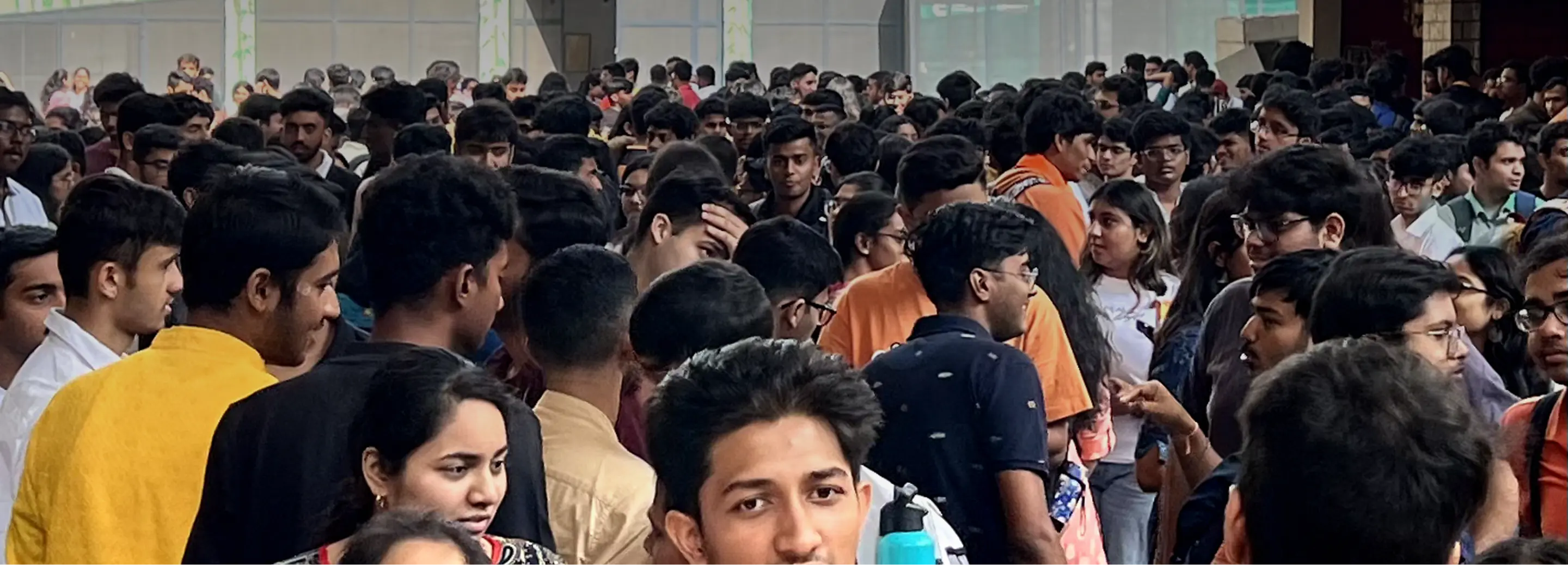
I still remember sprinting down three flights of stairs with my phone buzzing non-stop, weaving through the cafeteria crowd with a backpack full of chips and chocolate. This was Dello in its earliest days—me and my co-founder trying to solve a problem we'd experienced countless times: the eternal chaos of getting snacks at university.
In Indian colleges, a thirty-minute break isn't really thirty minutes. By the time you navigate the chaos of the campus, fight for attention at the counter, and weave back through the crowd, you've maybe got five minutes left to actually eat. We thought: what if students could skip the line entirely?
The First Attempt
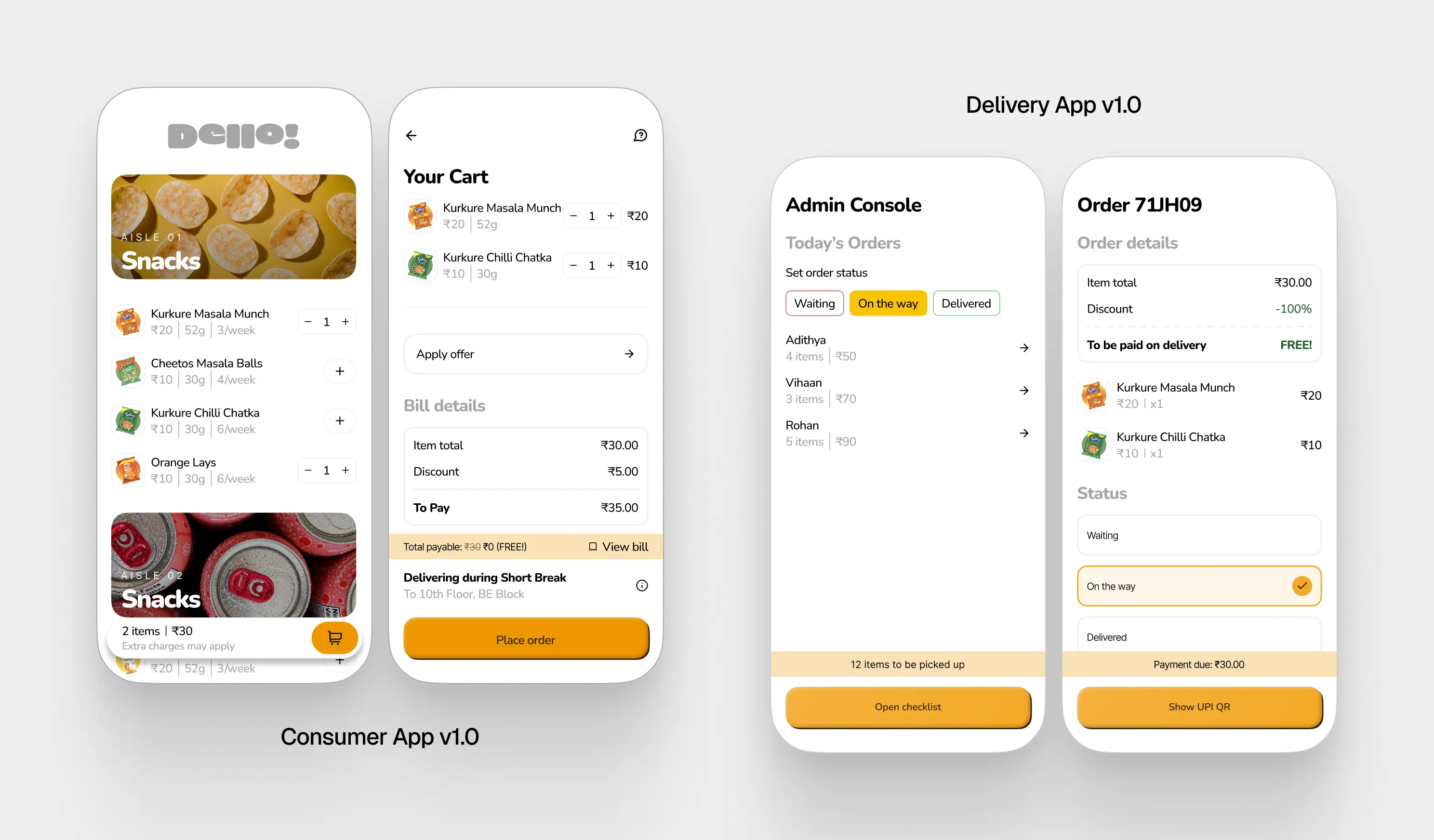
Our initial idea seemed clever. Students would place orders through our app before the break started. Then, when the bell rang, we'd dash downstairs, buy everything, and deliver it to their classrooms. No waiting, no crowds, no stress.
The students loved it—or at least, they loved the idea of it. But we quickly discovered a painful truth: we had just become the bottleneck. Instead of students waiting in line, we were waiting in line. Instead of students weaving through crowds, we were weaving through crowds. Our "delivery service" took fifteen minutes minimum, and we maxed out at maybe nine orders a day before collapsing from exhaustion.
It felt less like running a business and more like doing a favor for friends.
Learning to Think Logistically
The breakthrough came from a late-night conversation with Akash and Shrinidhi. We were stuck on how to scale beyond nine orders a day. Akash suggested: "Why don't you just carry the most frequent items directly on you?" Then Shrinidhi added: "Why not carry the entire catalogue?"
So I became the store. I started carrying a giant bag stuffed with our entire inventory and posted up on different floors before break even started. When an order came through, I was already there—usually within ten feet of the classroom door. No more running. No more lines. Just me, a bag of snacks, and a phone full of orders.
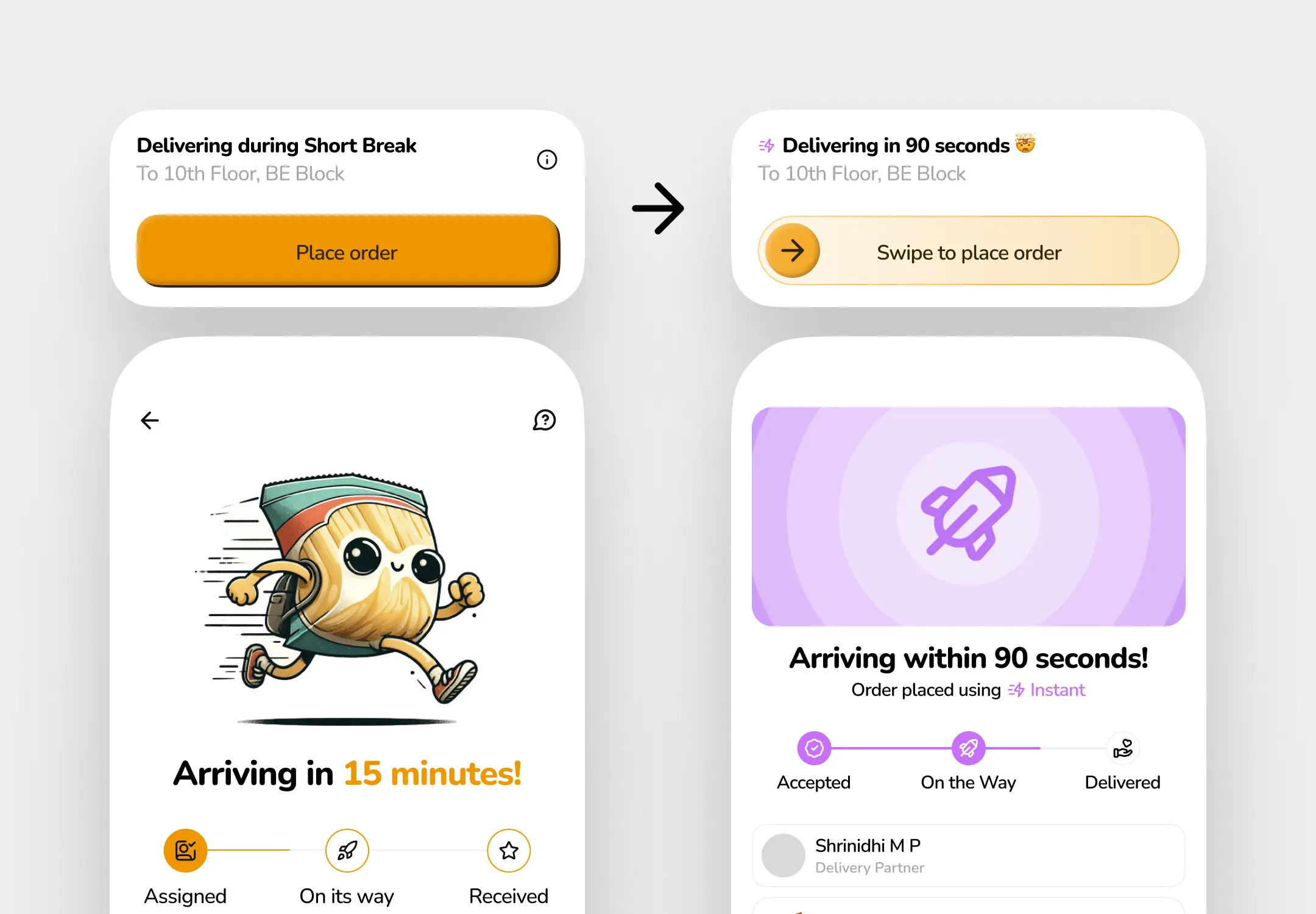
The difference was immediate. Delivery times dropped to ninety seconds. Orders exploded to one per minute. We went from nine orders a day to 50+.
Building for Scale - The Internal Tools
Once we proved the 90-second model worked, we shifted focus to designing the internal tools that would let us scale Dello beyond just two people. Each tool solved a specific operational challenge we discovered while delivering ourselves.
Order Handling UX: Speed Under Pressure
When we first started scaling to more delivery partners, the original order flow couldn't keep up. We watched partners develop workarounds that created new problems.
What we observed:
- Partners instinctively grabbed the newest orders first, causing older orders to get delayed and forgotten
- Partners preferred finishing all orders in one classroom before moving to the next, even if it meant backtracking
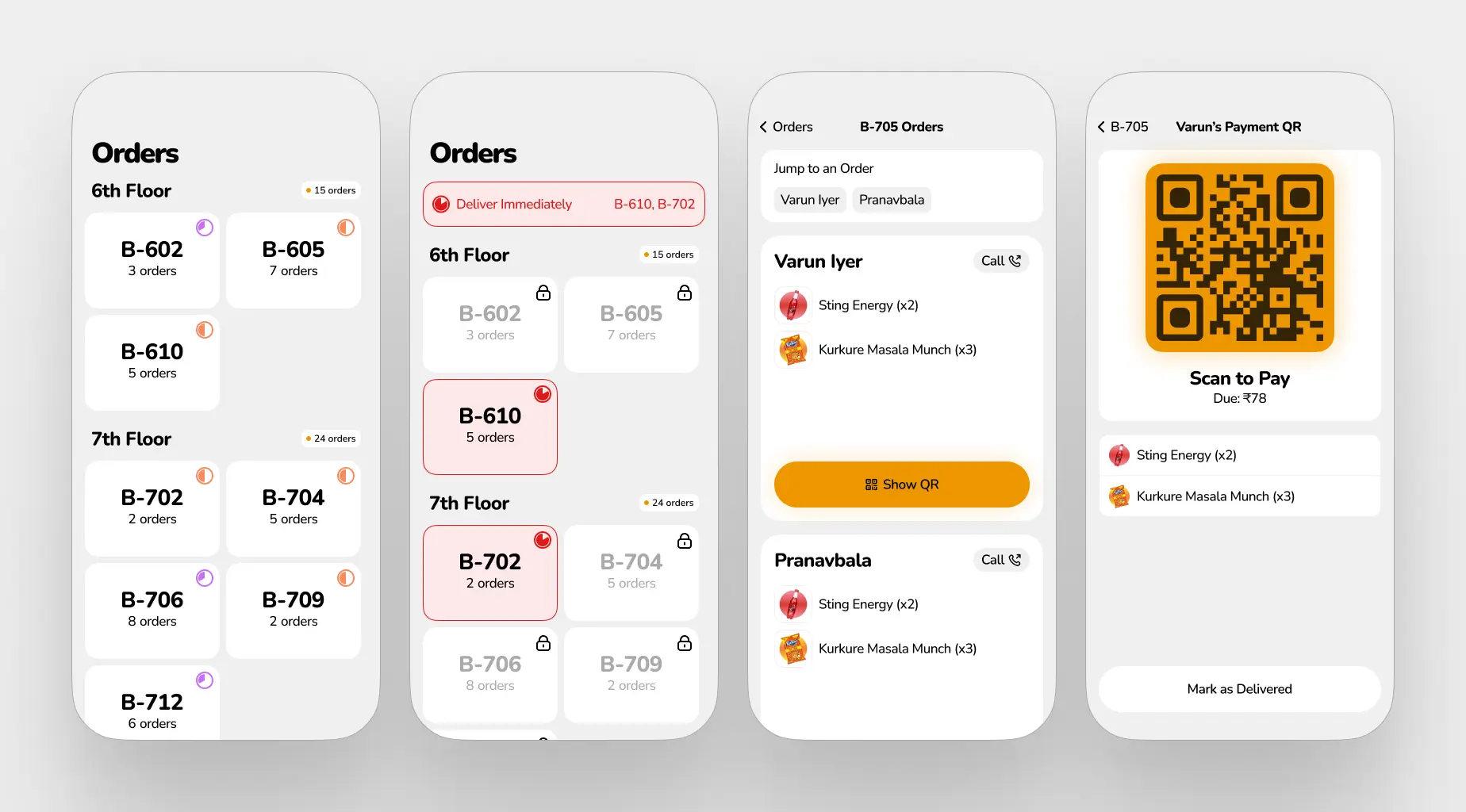
The redesign:
- Nesting orders by classroom: Instead of a chronological list, orders grouped by location so partners could complete an entire classroom at once
- Late order locking: When an order ran late, the system locked other classrooms until that priority order was handed off—forcing partners to handle delays first
- Quick person filters: A fast way to jump to a specific student's order without scrolling through the entire list
- More breathing room: We increased whitespace and reduced visual density. During a rush period with 60+ orders in 30 minutes, cognitive overload was real
Partner Onboarding: Balancing Speed and Screening
We needed a pipeline of delivery and sales partners as we grew across floors. The sign-up flow had to be fast enough that interested students wouldn't drop off, but thorough enough that we could actually screen people.
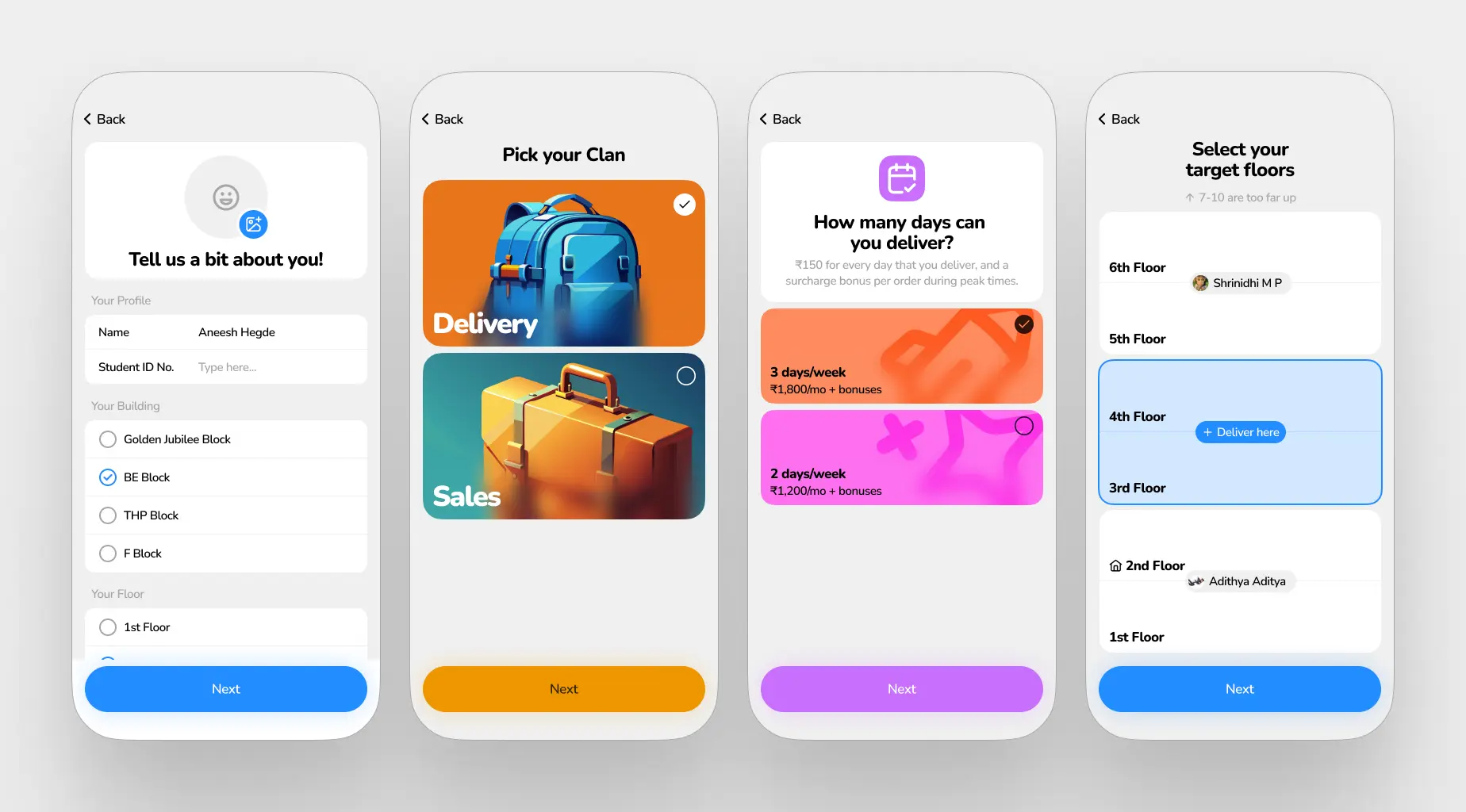
The form collected the essentials: name, contact, student ID, and role preference (delivery or sales). But the key insight was understanding availability patterns. We asked for work frequency (2–3 days/week) and current class schedule with preferred delivery floors. This let us match partners to time slots and locations where they were already going to be.
The Sales Dashboard: Converting Classrooms
Beyond instant delivery, we discovered a huge growth channel: direct classroom sales. During break, sales partners would walk into classrooms with Dello on their phones, and take orders on the spot. This was incredibly effective because it removed the "download an app" friction entirely.
The dashboard had two jobs: motivate and enable.
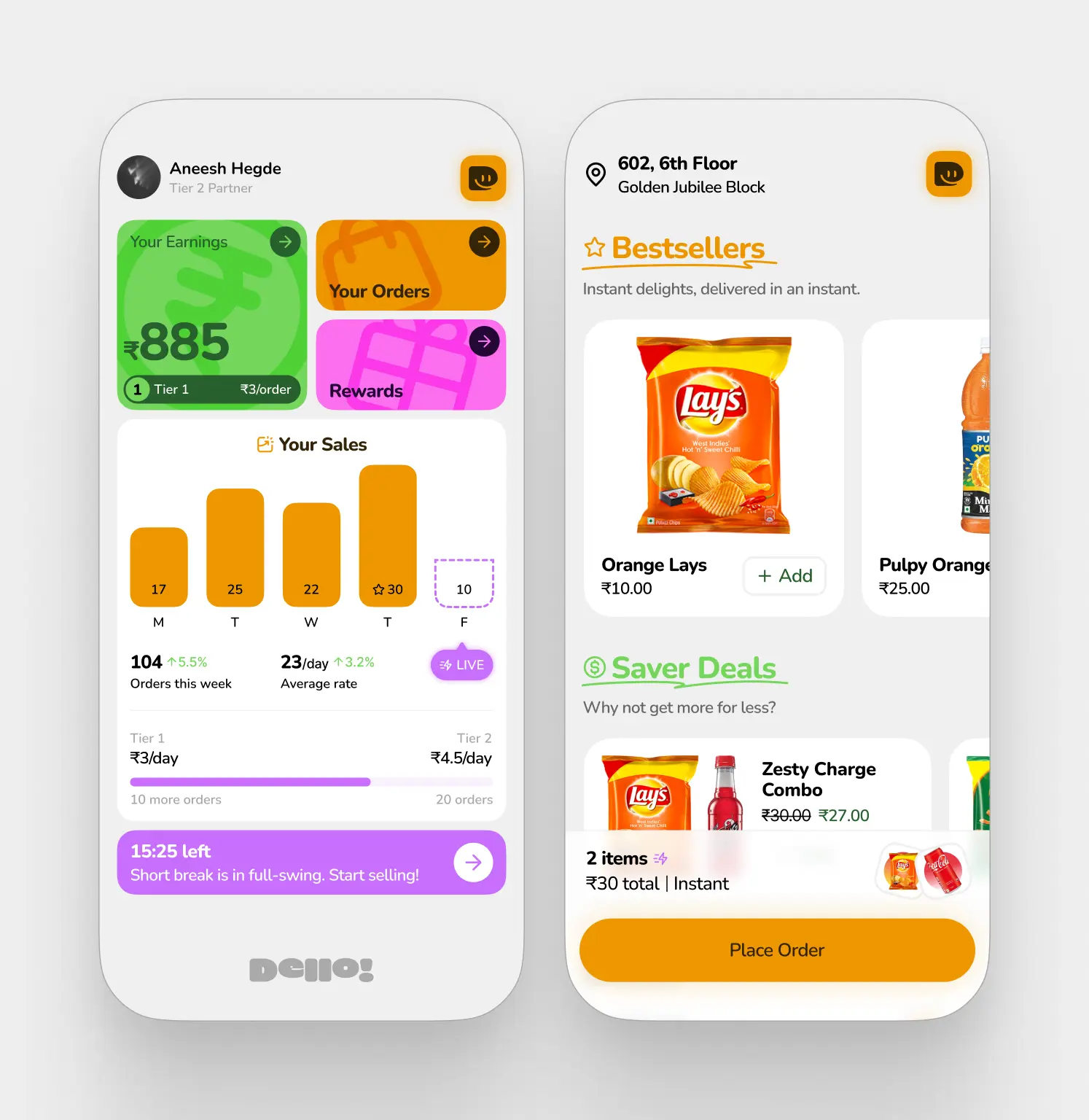
Motivation through visibility:
- Real-time daily sales numbers
- Earnings overview so partners could see exactly how much they'd made
Enablement between classrooms:
- Quick shortcuts to common tasks
- Status indicators so partners knew when to move to the next room
Once students experienced that first 90-second delivery, they were hooked.
What Dello Taught Me
We eventually sunset Dello in late 2024 because it needed a lot more time than we were able to commit as full-time university students.
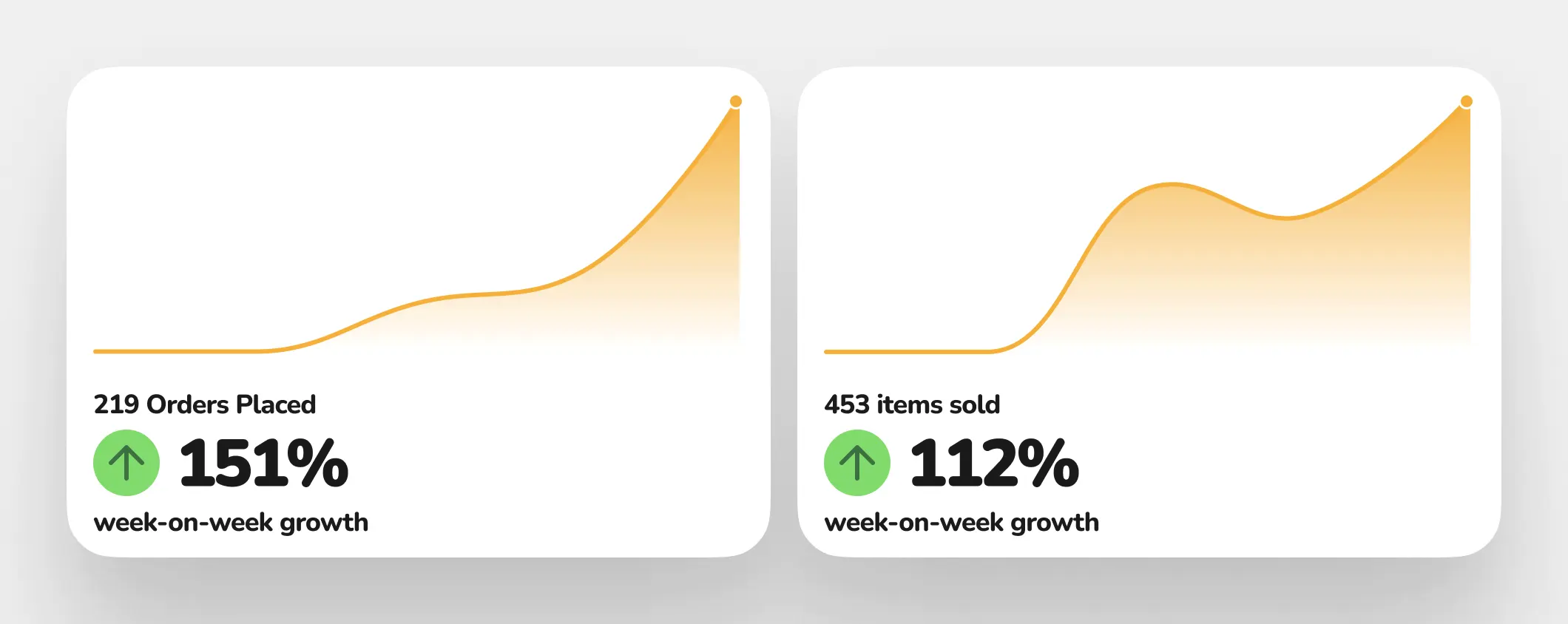
In this experience though, we achieved a 90-second delivery time and a 163% week-on-week growth in revenue from just system design changes.
I spent so much time early on worrying about the interface, the animations, the "experience." But the real problem was that we were physically stuck in the cafeteria line. No amount of beautiful design could fix a broken process. To build real habits, we had to bring that 10X better experience first.
Dello was my first real lesson in bridging the physical and digital worlds. It wasn't about the app. It was about understanding the problem deeply enough to question every assumption about how things "had to" work.